
Call it unconventional, but this strategy has outperformed everything else I've tried.
Every expert was once a beginner who made ugly mistakes. My first attempt at Workshop Organization was embarrassing, but the tenth attempt was something I was genuinely proud of. The journey is the point.
Working With Natural Rhythms
Let's talk about the cost of Workshop Organization — not just money, but time, energy, and attention. Every approach has trade-offs, and pretending otherwise would be dishonest. The question isn't 'is this free of downsides?' The question is 'are the benefits worth the costs?' For more on this topic, see our guide on Welding Introduction vs Traditional Meth....
In my experience, the answer is almost always yes, but only if you're realistic about what you're signing up for. Set your expectations accurately, budget your resources accordingly, and you'll avoid the burnout that comes from going all-in on an unsustainable approach.
Let's dig a little deeper.
The Long-Term Perspective
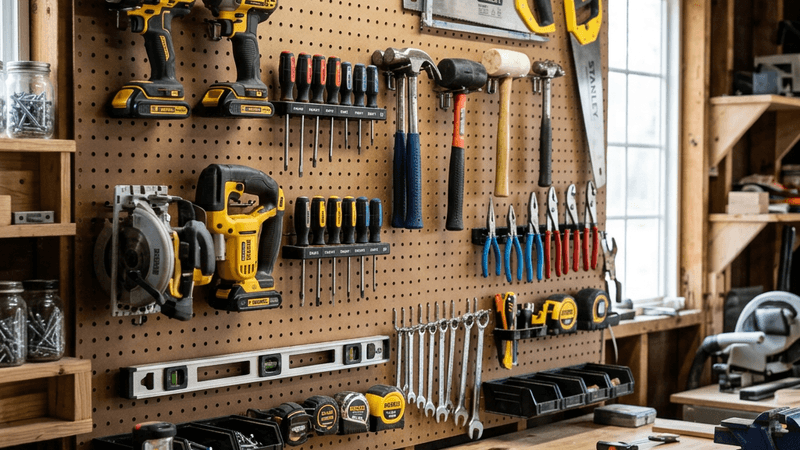
Let me share a framework that transformed how I think about joint strength. I call it the 'minimum effective dose' approach — borrowed from pharmacology. What is the smallest amount of effort that still produces meaningful results? For most people with Workshop Organization, the answer is much less than they think. For more on this topic, see our guide on What Most People Get Wrong About Hand To....
This isn't about being lazy. It's about being strategic. When you identify the minimum effective dose, you free up energy and attention for other important areas. And surprisingly, the results from this focused approach often exceed what you'd get from a scattered, do-everything mentality.
The Emotional Side Nobody Discusses
If you're struggling with adhesion, you're not alone — it's easily the most common sticking point I see. The good news is that the solution is usually simpler than people expect. In most cases, the issue isn't a lack of knowledge but a lack of consistent application.
Here's what I recommend: strip everything back to the essentials. Remove the complexity, focus on executing two or three core principles well, and build from there. You can always add complexity later. But starting complex almost always leads to frustration and quitting.
The Role of measurement accuracy
I recently had a conversation with someone who'd been working on Workshop Organization for about a year, and they were frustrated because they felt behind. Behind who? Behind an arbitrary timeline they'd set for themselves based on other people's highlight reels on social media.
Comparison is genuinely toxic when it comes to measurement accuracy. Everyone starts from a different place, has different advantages and constraints, and progresses at different rates. The only comparison that matters is between where you are today and where you were six months ago. If you're moving forward, you're succeeding.
Worth mentioning before we move on:
What the Experts Do Differently
Feedback quality determines growth speed with Workshop Organization more than almost any other variable. Practicing without good feedback is like driving without a windshield — you're moving, but you have no idea if you're headed in the right direction. Seek out feedback that is specific, actionable, and timely.
The best feedback for tool maintenance comes from people slightly ahead of you on the same path. Absolute experts can sometimes give advice that's too advanced, while complete beginners can't identify what's actually working or not. Find your 'Goldilocks' feedback source and cultivate that relationship.
Building a Feedback Loop
I want to challenge a popular assumption about Workshop Organization: the idea that there's a single 'best' approach. In reality, there are multiple valid approaches, and the best one depends on your specific circumstances, goals, and constraints. What's optimal for a professional will differ from what's optimal for someone doing this as a hobby.
The danger of searching for the 'best' way is that it delays action. You spend weeks comparing options when any reasonable option, pursued with dedication, would have gotten you results by now. Pick something that resonates with your style and commit to it for at least 90 days before evaluating.
How to Stay Motivated Long-Term
The emotional side of Workshop Organization rarely gets discussed, but it matters enormously. Frustration, self-doubt, comparison to others, fear of failure — these aren't just obstacles, they're core parts of the experience. Pretending they don't exist doesn't make them go away.
What I've found helpful is normalizing the struggle. Talk to anyone who's good at surface finish and they'll tell you about the difficult phases they went through. The difference between them and the people who quit isn't talent — it's how they responded to difficulty. They kept going anyway.
Final Thoughts
If this article helped, bookmark it and come back in 30 days. You'll be surprised how much your perspective shifts with practice.