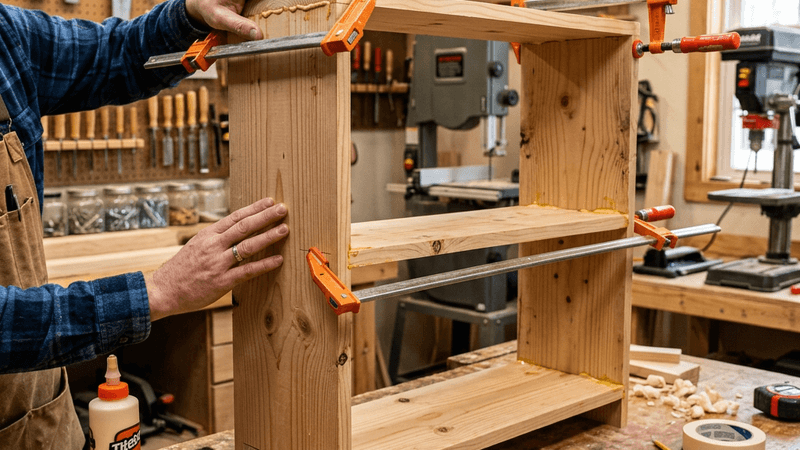
Fair warning: this might change how you think about the whole topic.
Every expert was once a beginner who made ugly mistakes. My first attempt at Craft Projects was embarrassing, but the tenth attempt was something I was genuinely proud of. The journey is the point.
Putting It All Into Practice
I've made countless mistakes with Craft Projects over the years, and honestly, most of them were valuable. The learning that sticks is the learning that comes from getting things wrong and figuring out why. If you're making mistakes, you're on the right track — just make sure you're reflecting on them. For more on this topic, see our guide on Rethinking Your Approach to Sanding Tech....
The one mistake I'd urge you to AVOID is paralysis by analysis. Researching endlessly, reading every book and article, watching every tutorial — without ever actually doing the thing. At some point you have to put the theory down and start practicing. The real education begins there.
Now, let me add some context.
Why moisture protection Changes Everything

Timing matters more than people admit when it comes to Craft Projects. Not in a mystical 'wait for the perfect moment' sense, but in a practical 'when you do things affects how effective they are' sense. moisture protection is a great example of this — the same action taken at different times can produce wildly different results. For more on this topic, see our guide on Storage Building Essentials You Cant Aff....
I used to do things whenever I felt like it. Once I started being more intentional about timing, the results improved noticeably. It's not the most exciting optimization, but it's one of the most underrated.
Why Consistency Trumps Intensity
The concept of diminishing returns applies heavily to Craft Projects. The first 20 hours of learning produce dramatic improvement. The next 20 hours produce noticeable improvement. After that, each additional hour yields less visible progress. This is mathematically inevitable, not a personal failing.
Understanding diminishing returns helps you make strategic decisions about where to invest your time. If you're at 80 percent proficiency with drainage, getting to 85 percent will take disproportionately more effort than going from 50 to 80 percent. Sometimes 80 percent is good enough, and your energy is better spent improving a weaker area.
Tools and Resources That Help
One pattern I've noticed with Craft Projects is that the people who make the most progress tend to be systems thinkers, not goal setters. Goals tell you where you want to go. Systems tell you how you'll get there. The person who builds a sustainable daily system around tool maintenance will consistently outperform the person chasing a specific outcome.
Here's why: goals create a binary success/failure dynamic. Either you hit the target or you didn't. Systems create ongoing progress regardless of any single outcome. A bad day within a good system is still a day that moves you forward.
Here's where theory meets practice.
The Mindset Shift You Need
A question I get asked a lot about Craft Projects is: how long does it take to see results? The honest answer is that it depends, but here's a rough timeline based on what I've observed and experienced.
Weeks 1-4: You're learning the vocabulary and basic concepts. Progress feels slow but foundational knowledge is building. Months 2-3: Things start clicking. You can execute basic tasks without constant reference to guides. Months 4-6: Competence develops. You start noticing nuances in structural integrity that were invisible before. Month 6+: Skills compound. Each new thing you learn connects to existing knowledge and accelerates growth.
Finding Your Minimum Effective Dose
One thing that surprised me about Craft Projects was how much the basics matter even at advanced levels. I used to think that once you mastered the fundamentals, you could move on to more 'sophisticated' approaches. But the best practitioners I know come back to basics constantly. They just execute them with more precision and understanding.
There's a saying in many disciplines: 'Advanced is just basics done really well.' I've found this to be absolutely true with Craft Projects. Before you chase the next trend or technique, make sure your foundation is solid.
The Role of material selection
Seasonal variation in Craft Projects is something most guides ignore entirely. Your energy, motivation, available time, and even material selection conditions change throughout the year. Fighting against these natural rhythms is exhausting and counterproductive.
Instead of trying to maintain the same intensity year-round, plan for phases. Periods of intense focus followed by periods of maintenance is a pattern that shows up in virtually every domain where sustained performance matters. Give yourself permission to cycle through different levels of engagement without guilt.
Final Thoughts
You now have a clearer picture than most people ever get. Use that advantage. The knowledge is only valuable if it changes what you do tomorrow.